How to Read a Chinese Calligraphy Artwork
A Guide to Understanding Its Content and Meaning
6/10/20263 min read
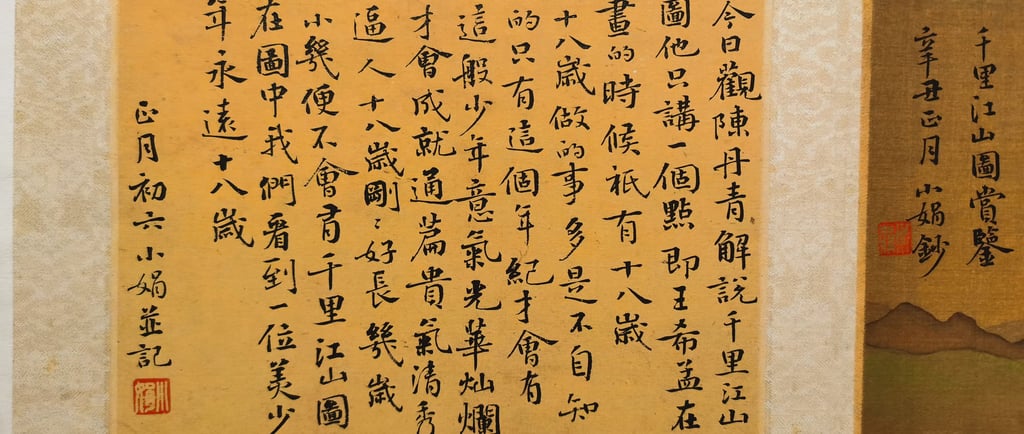
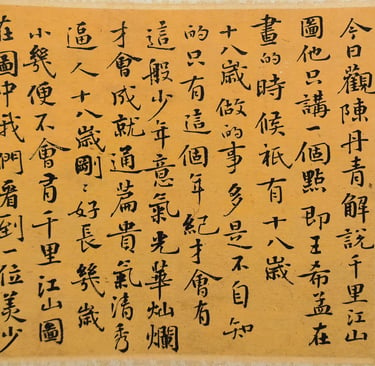
Category: Art Guide | Reading time: ~6 min Target keywords: understand Chinese calligraphy meaning, how to read Chinese calligraphy, buy Chinese calligraphy artwork
For most Western viewers, a piece of Chinese calligraphy is an immediate visual experience — sweeping brushstrokes, dynamic composition, ancient characters that feel at once mysterious and beautiful. But what does it actually say? And what should you look for when appreciating or purchasing a piece?
This guide walks you through the key elements of reading and understanding a Chinese calligraphy artwork, so that your next encounter with one is not just aesthetic, but meaningful.
Start with the Script Style
Chinese calligraphy uses several distinct script styles, each with its own aesthetic character and historical background. Knowing which style you are looking at changes how you read the work.
Regular Script (楷书, kǎishū) is the most readable and structured form. Characters are clear, balanced, and recognisable. Think of it as the "print" of Chinese writing — precise and disciplined. Classical poems and proverbs in regular script are a classic choice for the home.
Running Script (行书, xíngshū) is more fluid and connected, like a relaxed, slightly accelerated version of regular script. It flows naturally across the page and is the most common style in everyday calligraphy. Elegant but still legible.
Cursive Script (草书, cǎoshū) is highly abbreviated and expressive — artistically bold but challenging to read even for native Chinese speakers. It is prized for its energy and spontaneity, and is often the choice of the most confident calligraphers.
Seal Script (篆书, zhuànshū) is an ancient form with a pictographic quality, reminiscent of its oracle-bone origins. Often used for seals and formal ceremonial pieces.
Clerical Script (隶书, lìshū) emerged during the Han dynasty and is characterised by sweeping, wave-like horizontal strokes. It has a ceremonial, archaic feel that gives a piece considerable gravitas.
What Does the Artwork Say?
Chinese calligraphy artworks typically feature one of the following types of content:
Classical poetry — Tang dynasty poems (618–907 AD) are among the most commonly written texts. A poem by Li Bai or Du Fu rendered in running script is a piece steeped in cultural memory. Even without knowing Chinese, you can sense in the visual rhythm of the characters the same metre that makes these poems sing.
Auspicious phrases and proverbs — Among the most beloved examples:
福 (fú) — good fortune
寿 (shòu) — longevity
吉祥如意 (jíxiáng rúyì) — may good fortune follow you in all things
厚德载物 (hòudézàiwù) — great virtue carries all things
These phrases carry centuries of cultural intention and make deeply meaningful gifts.
Philosophical wisdom — Excerpts from Confucius, Laozi, or Buddhist sutras. Often contemplative and well-suited to study rooms or meditation spaces.
Single characters — An entire artwork may consist of just one character: 禅 (chán, Zen), 爱 (ài, love), 道 (dào, the Way). Minimal in form, but profound in resonance.
Reading the Full Composition
Beyond the main text, an authentic calligraphy work contains several additional elements that give it its complete meaning:
The main body (正文): The primary text — poem, phrase, or character — that occupies the central space of the composition.
The inscription (题款): Written in smaller characters, usually to one side or at the bottom. It identifies the work: what was written, for whom it was made, and often when and where. This gives the piece its personal and historical context.
The artist's signature (落款): The calligrapher signs their name — and often adds the date and location — in a smaller script, sometimes slightly more informal than the main body. It is both authentication and personal presence within the work.
Seals (印章): Red vermilion stamps applied with carved stone seals. Look for one or two seals bearing the calligrapher's name or studio name — sometimes accompanied by a phrase seal with a personal motto. This tradition goes back over 2,000 years. The red of the seal against the black ink on white paper is one of the defining aesthetic relationships in Chinese art.
What Makes a Piece Meaningful to Own?
When selecting a calligraphy work, consider both the visual quality and the content:
The text itself: Does the phrase carry meaning you connect with? A piece that says something — to you, or to the person you are gifting it to — is worth more than a decorative text you cannot relate to.
The script style: Does the visual character of the script suit the space where it will live? A bold cursive piece carries different energy than a careful regular-script poem.
The artist's credentials: Is the calligrapher formally trained and associated with a recognised institution, such as the China Calligraphers Association (中国书法家协会)?
Materials: Quality xuan paper and natural ink age with beauty; cheap alternatives do not.
A Note on Buying with Meaning
Calligraphy is one of the few art forms in which what the work says is as important as how it looks. A character meaning "harmony" above a dining table, or a poem about friendship gifted to a colleague, carries cultural resonance that extends back centuries.
If you are unsure what a piece says — or what it might say for a specific occasion — it is always worth asking. At VivaTinta, every artwork comes with a full explanation of its content, cultural meaning, and context, so that the piece you choose speaks clearly, in every sense.
Browse our collection of original calligraphy artworks →
All artworks at VivaTinta are original works by Yuan Xiaojuan, an official member of the China Calligraphers Association, created using traditional xuan paper and natural ink.